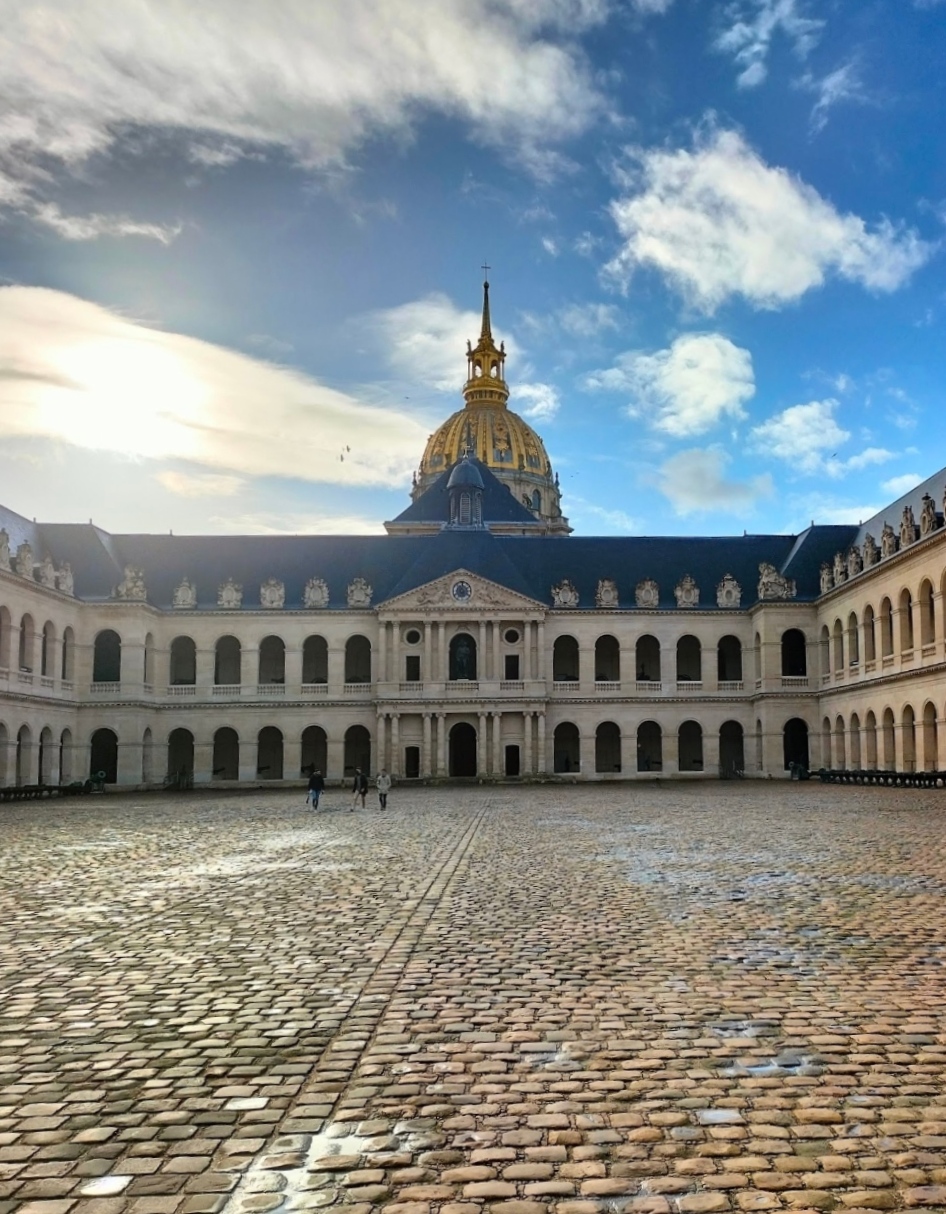
Under the golden dome of the Hôtel des Invalides, History doesn’t just sit behind glass; it interrogates you. It was within these monumental walls, surrounded by centuries of heavy stone and the artifacts of the Museum of the Army in Paris, that we gathered a cohort of international children for a MOSHI workshop.
The question we brought with us was deceptive in its simplicity: What is Peace?
To help us untangle it, we didn’t look to textbooks. We looked to the collection of the Musée de l’ Armée Hôtel des Invalides, and we looked to someone who had lived through the very antithesis of the question: a grandfather who had served in the elite French Green Berets “The Commandos Marine”.
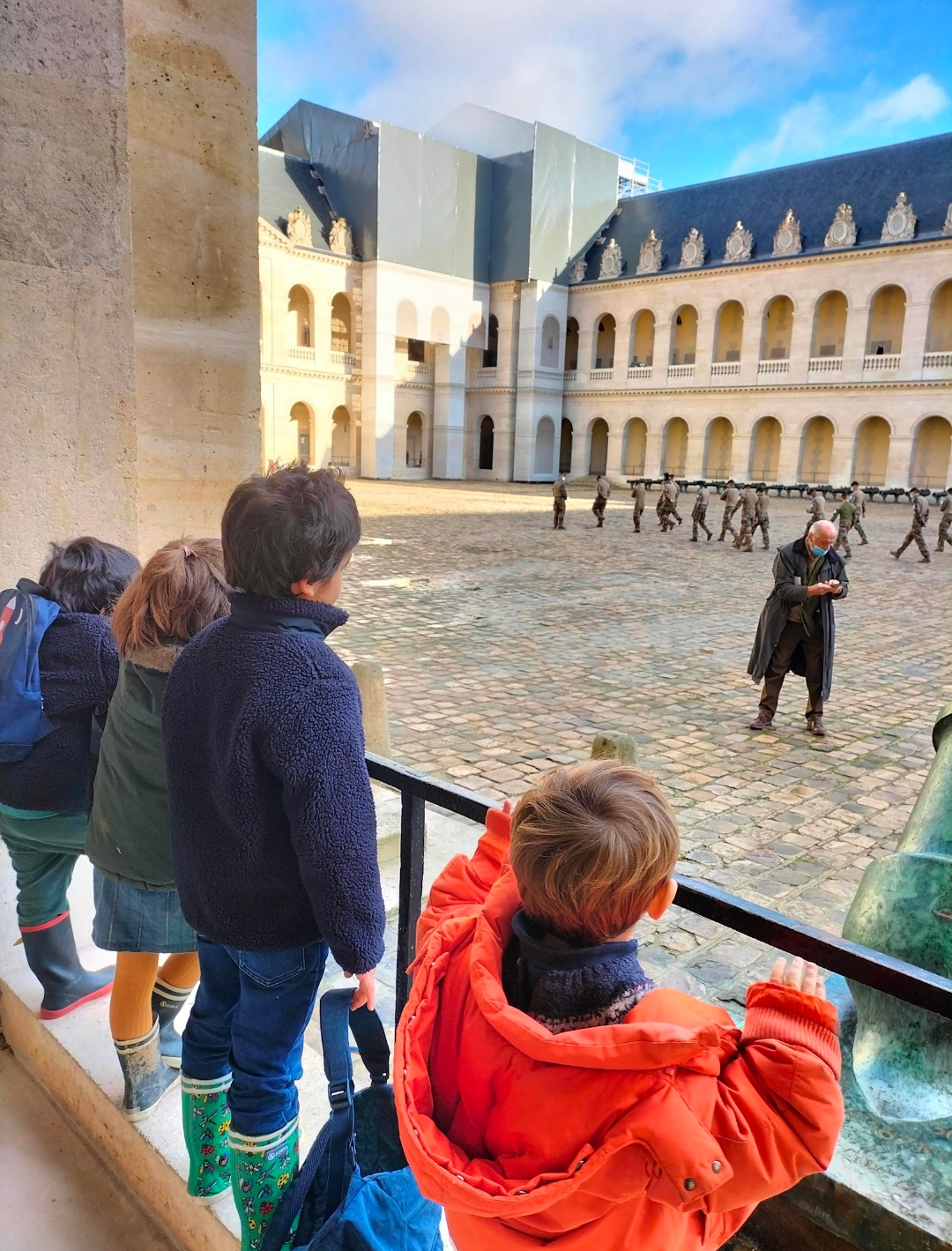
The Weight of the Past
Our journey began among the grand narratives of human conflict.
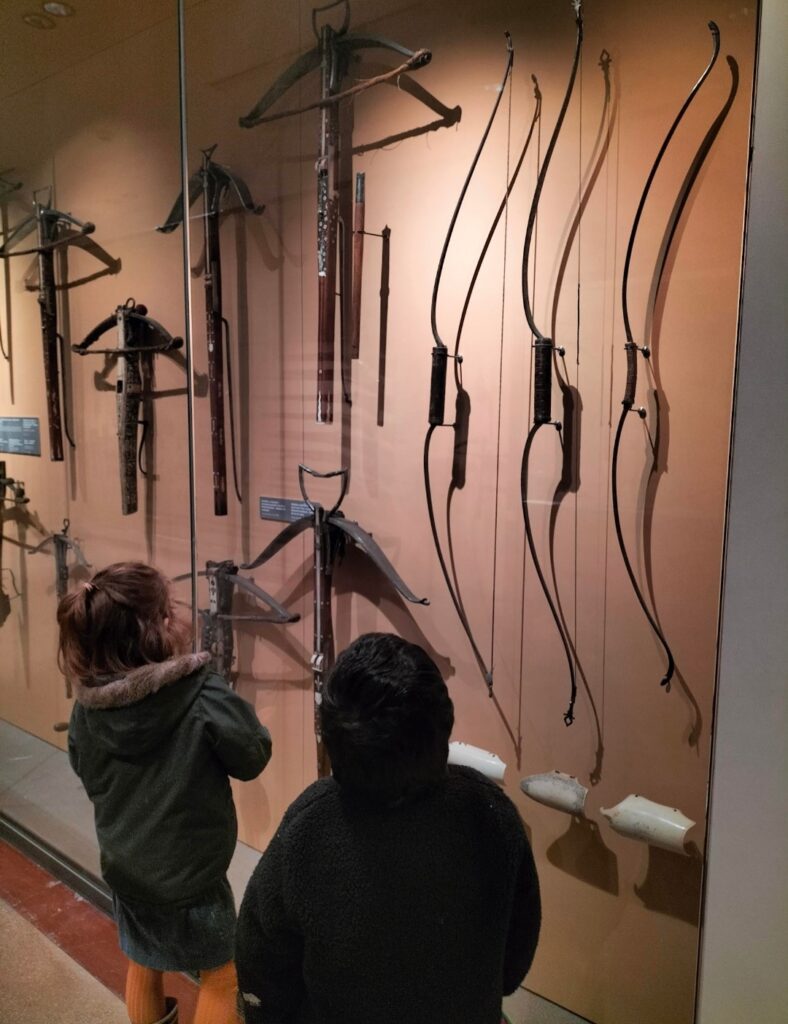
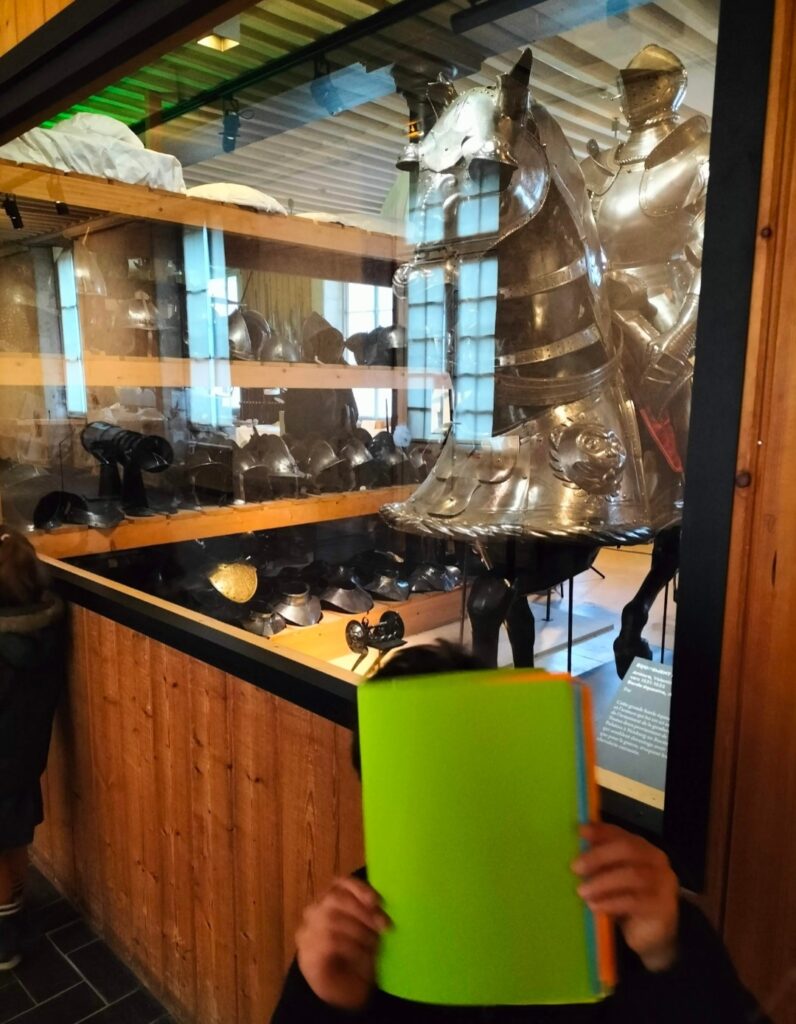
The children stood before the towering, intricate steel armors of medieval knights, moving sequentially through time to the precision-crafted weapons of the Napoleonic era.
At first glance, a museum of the army looks like a monument to war. But as the children studied the archival pieces, a deeper realization emerged. These heavy breastplates and polished sabers weren’t just tools of aggression; they were also the stark, physical testaments created by men and women trying to protect their homes, their families, and the hard-won peace of their nations against invaders.
The grandfather stood with them, a living bridge to that History. Looking at the machinery of combat, he spoke to the children with absolute candor.
He didn’t romanticize the uniform. Instead, he shared the quiet, heavy truth of a man who had seen the front lines: war is an atrocity, a profound human failure, and his greatest hope was that none of the children standing before him would ever have to experience its reality.
The Studio: Micro-Conflicts and Crayon Diplomacy
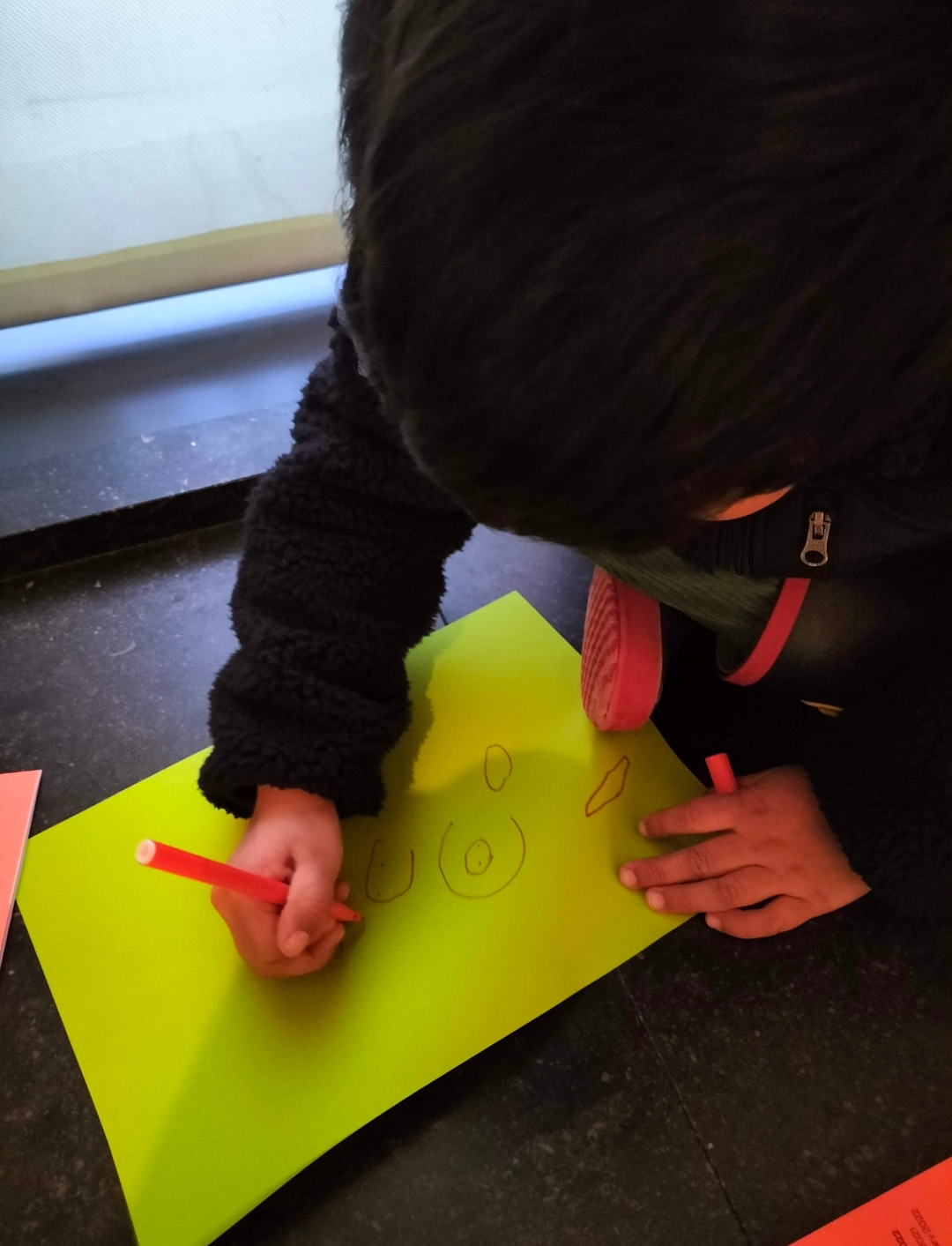
To ground these massive concepts of global conflict and veteran testimony, we transitioned the children into the active, creative core of the MOSHI Method. We asked them to pick up crayons and markers, to draw the history and feelings they had just absorbed, and to collaborate.
But we introduced a constraint: they had to share the tools.
Human nature, whether in a geopolitics board room or a museum atelier, is remarkably consistent. Within minutes, micro-frictions sparked. Sibling rivalries flared. Two children wanted the exact same crimson marker at the exact same moment. Voices escalated.
A miniature war of ownership was brewing. Instead of stepping in as authoritative judges, the MOSHI facilitators paused. We turned to the rest of the cohort. We asked the other children to step in, look at the dispute, and help their peers navigate the conflict.
The Birth of Diplomacy
What followed was a beautiful, emergent masterclass in human relations.
Left to co-create a solution, the children began to negotiate. They established a system of sharing, negotiated time-limits, and bartered colors. They didn’t just resolve a fight over a crayon; they discovered, entirely by themselves, the foundational mechanics of international diplomacy.
By the end of the session, when we asked the children to define Peace their answers had transformed. It was no longer an abstract, global concept. It was intimate, local, and actionable:
“Peace is being a nice person.” L. 5 years old
“It means not getting angry just because we disagree or want the same thing.” R. 6 years old
Inside a monument built to honor the warriors of the past, a new generation realized that Peace isn’t just the absence of war: it is a daily, creative practice of empathy, sharing, and self-regulation. They walked out of Les Invalides not just with a better understanding of history, but with the personal blueprints to build a more harmonious future.